







Digital Door Locks – What are they & When To Use them
Do you have a digital lock on your door? Perhaps you’re tinkering with the idea of installing one for extra domestic protection? This blog explains what digital doors are, their various types, the major benefits of installing them, and the most suitable door types for digital locking mechanisms.
Digital Locks: A Basic Description
Let’s start with a basic description of the item in question. Digital door locks use digital signals to regulate who can access your property. So, you don’t have to rely on traditional locks and keys! Advanced materials come into play when manufacturers create these door locks. They’re made of the best sensors, circuits, software, and materials. So, you control them via:
- Keypads
- Keycard systems
- Biometric recognition
- Smartphone app control
These doors offer timed access and remote monitoring. Exploring the history of digital door locks, we can trace their origins back to one James Sargent who created a time lock in 1873. Modern digital locks, however, have come a long way since then both in terms of unbreakability and the robustness they provide. They’re used in commercial and residential settings alike.
Digital Door Lock Types: Electronic vs. Mechanical
So, are you ready to choose the best digital lock for your home/office? No need to be hasty; we will go over the two major types of digital door locks first!
Electronic Digital Locks
As the name says, electronic locks need a power source to remain operational. You can either get battery-powered electronic locks or use mains electricity. These are sophisticated locks and come with trinkets like:
- Keypads
- Fingerprint sensors
- Bluetooth connections
- WiFi connectivity
- RFID access tools
You can also integrate these locks with your smart home system. This way, you’ll use them with remote access. Imagine controlling access to your precious little home from your office. It’s quite obvious why both homeowners and entrepreneurs prefer these lock types.
Mechanical Digital Locks
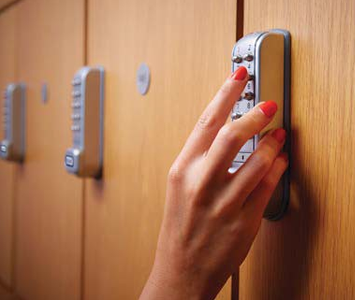
If you’re not the one to trust electricity, you can choose digital locks that work mechanically. So, they use push-button mechanisms to operate, offering traditional functioning blended with some of the best anti-burglar methods imaginable. But keep in mind that these mechanical types work without electricity and are suitable for situations in which power reliability isn’t guaranteed. That’s why you should avoid using them on premises that need low-maintenance burglary resistance. Also, the British Standard BS8607 was introduced for testing and certifying these mechanical locks.
Electronic Digital Locks: Down the Rabbit Hole
Even electronic locks have subtypes that you should know of, such as these:
- Magnetic: These locks secure doors by using electromagnets. You can try them on your glass doors.
- Electronic Keypad: Electronic keypad locks ask you for a code/password to allow entry.
- Keycard/Fob: These lock types use cards of fobs to give you access.
- Bluetooth/WiFI: With Bluetooth or WiFi-enabled electronic locks, you can control them with your phone.
- Biometric: These types use advanced techniques like facial recognition or fingerprint to let you enter (they’re ideal for commercial properties, you guessed it!).
- Deadbolts/Latches: These door lock types provide strong security with digital control.
- Passive Electronic: Passive locks work without a constant power supply so you’ll have to use a key to activate them.
6 Door Types Suitable for Digital Door Locks
Did you know that the smart lock market exceeded $300m in 2025? These locks work on many doors, such as:
- Wooden Doors: You can secure your residential property’s wooden door with keypad & biometric door locks.
- Metal Doors: Metal doors are used as exterior entrances. But you’ll need professional assistance to install an electronic door lock on these heavy giants!
- Glass Doors: You should use specialised locks to avoid damage to your glass doors so we recommended above that magnetic locks would be perfect in this regard.
- Sliding Doors: You should get particular models that were designed for sliding doors.
- Fire-Rated Doors: Fire-resistant doors deserve fireproof digital locks!
- Metal Gates: Digital gate locks provide additional security for the main entrances.
Why Should You Switch to Digital Locks?
1. Better Security
You can easily reprogramme your digital locks if someone compromises your domestic security or if you’re hiring new staff members. Digital locks also let you customise codes for many users so you can prevent unauthorised access. Also, they send smart alerts to your phone if multiple incorrect entry attempts are noticed by the security system.
2. Convenient Protection
Digital locks are controllable via phones. So, you can lock/unlock your door no matter where you are located right now. These locks can be programmed to lock automatically after a set period, ensuring your home is always secure.
3. Affordable Safety
You won’t have to fumble around for spare keys in case of emergency lockouts. Also, no spare keys means no unauthorised access! You’ll save a fortune on rekeying costs, too.
4. Easy Integration
These locks work well with other smart home devices like thermostats. Some digital locks are so high-tech that they even generate activity logs so you can see who entered the house at what time. That’s how you can keep an eye on visitors and guests on your property.
Lock & Key: Your Go-To Locksmith Agency
So, are you ready to toughen up your property’s security? Want to make your home/office next to impossible to break into by burglars? We at Lock & Key Leeds are proud to be the only City & Guilds accredited locksmith agency in the UK. We hire qualified, vetted, DBS-checked, experienced, and trustworthy locksmiths to bring your house’s security up to scratch. You get 24/7 availability from us. Also, our locksmiths can arrive at your location in 30-60 minutes for emergency locksmithing services.